


A major British coffee brand is quietly expanding across the U.S., not through traditional cafés, but through one of America’s most beloved roadside travel center chains.
The partnership is bringing automated coffee machines capable of serving barista-quality drinks to thousands of consumers every day, turning routine gas station stops into an unexpected front in the global coffee industry.
Drivers in Texas and across the South may already recognize a giant yellow road sign featuring a beaver wearing a red hat, the unmistakable symbol of Buc-ee’s, the coffee brand’s new partner.
What is Buc-ee’s?
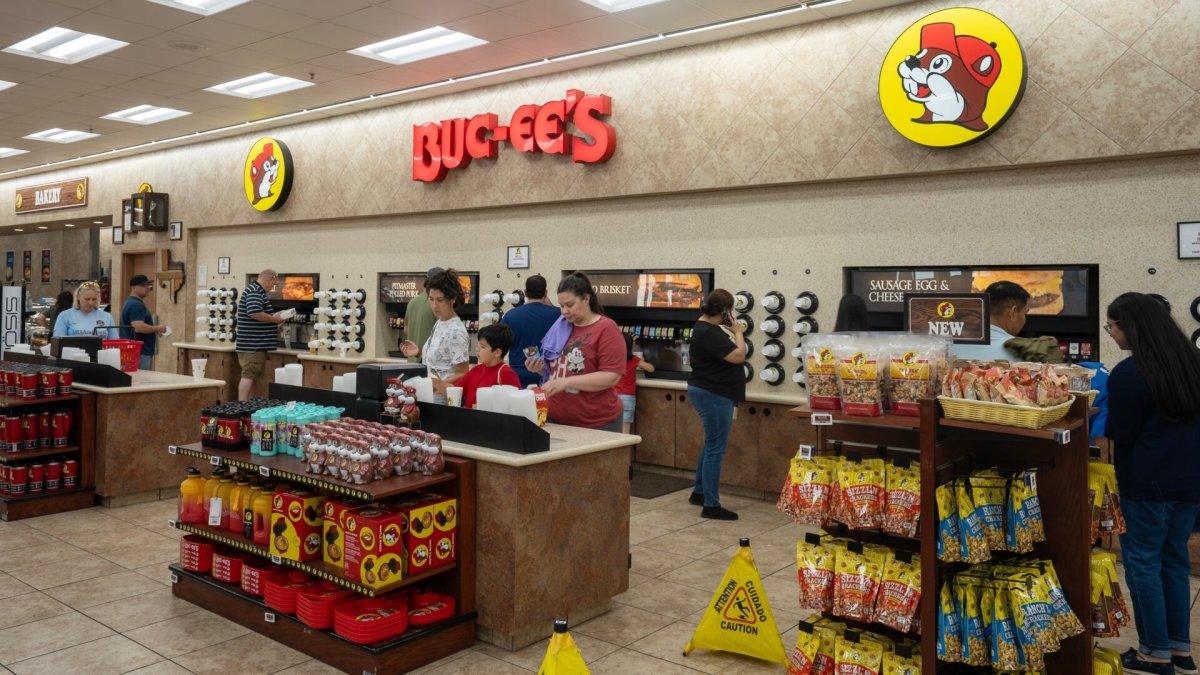
Founded in 1982, Buc-ee’s is a Texas-based chain of mega-gas stations famous for its massive travel centers. The chain operates nearly 70 locations across 11 states, according to its store locator.
Each location features dozens of gas pumps and electric vehicle chargers, along with an enormous retail space selling food, convenience items, home décor, clothing, and branded merchandise. Most importantly, it is best known for having spotless bathrooms.
More Buc-ee’s Business News:
For many road-tripping families, commuters, and long-haul truck drivers, Buc-ee’s has become an unmissable and reliable pit stop.
Now, Buc-ee’s is expanding its beverage offerings by installing automated Costa Coffee machines across its stores, giving travelers more options and helping it better compete with traditional coffee chains such as Starbucks.
Buc-ee’s coffee bar goes viral
Buc-ee’s coffee offerings first gained traction in 2022, when customers began posting Instagram and TikTok videos highlighting the chain’s build-your-own coffee bar.
The self-service station quickly went viral for its extensive customization options and unusually low prices compared to typical coffee shops.
The buzz eventually led the company to open Buc-ee’s Beanery, a standalone coffee shop in Lake Jackson, Texas. The location features in-store ordering and a drive-thru, serving handcrafted espresso drinks similar to those found at traditional cafés.
While self-service bars are common at gas stations, Buc-ee’s stands out for the sheer number of customization options available to customers, with no limit on how much can be added.
Buc-ee’s coffee bar customizations
- Brews: Hot and iced coffee with multiple roast styles and flavor varieties
- Milks: Dairy milk and plant-based options
- Creamers: Liquid and powdered, with flavored and unflavored options
- Syrups: Various flavors
- Sauces: Multiple flavors
- Sugar: Regular and brown sugar, as well as zero-calorie sweeteners
One of the biggest draws remains the value price. A coffee typically costs between $1.50 and $2.70, depending on the type and size, far below the $4 to $10 many coffee shops charge.
Prices have increased over time, however. Early customers once paid as little as 50 cents for a cup of hot drip coffee.
Costa Coffee’s vending-machine strategy
Costa Coffee was founded in 1971 and has grown into one of the largest coffee chains in the U.K.
The company launched its automated coffee concept in 2011 with the introduction of Costa Express, its first self-service machines placed across retail stores and gas stations after Costa acquired vending company Coffee Nation, according to Reuters.
The rollout proved successful. By 2013, Costa had installed about 3,000 machines, hitting a target originally set for 2016.
Since then, the company has developed more advanced models and expanded the concept internationally.
Costa accelerated its U.S. expansion in 2022 by introducing its Smart Café machines, following The Coca-Cola Company’s (KO) 2019 acquisition of the brand for $4.9 billion, according to Foodservice Equipment & Supplies.
The machine can prepare more than 200 barista-quality drinks in under 90 seconds, crafting espressos, Americanos, cappuccinos, lattes, flat whites, and cortados, many of which are available hot or iced, according to Costa’s website.
“With no need to hire baristas, you can serve travelers premium beverages, customized just the way they like them,” said Costa in a statement. “It’s a low-risk, high-margin way to elevate the traveler experience.”
Buc-ee’s adds Costa Coffee machines
The exact date when Buc-ee’s began installing the Costa Smart Café machines is unclear, but social media posts suggest the rollout began around mid-2025.
One of the earliest sightings came from a British traveler who posted a TikTok video showing a Costa machine inside a Buc-ee’s location.
Since then, multiple videos on TikTok and Instagram have captured customers reacting to the machines appearing at their local stores, suggesting the expansion has been gradual.
For Costa, the partnership offers a way to reach millions of travelers who already stop at Buc-ee’s locations.
Starbucks and Costa Coffee: a global coffee rivalry
While both Starbucks and Costa operate thousands of stores worldwide, their strategies and current business challenges differ significantly.
Starbucks
Starbucks (SBUX) remains the largest coffeehouse chain in the world, with more than 41,000 stores across 80 countries as of 2026.
However, the company recently launched a turnaround initiative called “Back to Starbucks” to revive store traffic and improve the customer experience following a period of declining sales.
The company has also closed several underperforming locations in the U.S. and U.K., which some analysts believe could allow smaller chains and independent cafés to expand into markets once dominated by Starbucks.
Bailey Pemberton, an equity analyst at Simply Wall St, said the company must carefully balance expansion and store closures.
“Store closures and the handover of some sites to smaller competitors could work against the goal of reestablishing Starbucks as a consistent ‘third place’ if traffic fragments in key urban neighborhoods,” said Pemberton.
More Starbucks Business News:
- Starbucks announces more store closures as strategy shifts
- Starbucks makes two big changes to 1,000 stores in 2026
Despite those challenges, recent results suggest signs of recovery.
In the first quarter of fiscal 2026, Starbucks reported a global comparable store sales increase of 4% year over year, with North America comparable store sales up 4%. The gains were driven by higher transaction volumes and higher average ticket size.
The company also added128 net new stores worldwide during the quarter, bringing its total U.S. locations to 16,911.
Monthly visits to Starbucks stores were down about 0.6% during the first half of 2025, but later rebounded to about 1.6% growth in the first five months of the second half of the year, according to Placer.ai.
Costa Coffee
Costa operates more than 4,000 retail stores across 30 markets, over 16,000 “Proud to Serve” placements in 23 markets, and more than 14,600 Smart Café machines in 14 markets, according to its website.
However, the company has faced financial pressures in recent years.
Costa’s losses more than doubled to £13.5 million ($17.91 million) in 2024, up from £5.8 million ($7.7 million) the previous year, according to the Independent.
Before the Covid pandemic, the company had reported annual profits of up to £100 million ($132.64 million).
Costa attributed the downturn to increased competition, rising operational costs, and a reduced store footprint.
In 2025, several media reports suggested that Coca-Cola was exploring the sale of Costa for around £2 billion ($2.65 billion), less than half the price it paid eight years earlier.
Clive Black, an analyst at Shore Capital, told the Independent that Costa may have reached saturation in its home market.
“It has perhaps reached the peak of its extent in the U.K., ‘peak Costa’ if you like, which makes it more exposed than most to competitive challenges,” said Black.
Why Buc-ee’s could be key to Costa Coffee U.S. expansion
That pressure may help explain Costa’s push into the U.S. market.
By placing Smart Café machines inside Buc-ee’s travel centers, locations already known for attracting heavy traffic, the brand can introduce its drinks to millions of American consumers without building thousands of new stores.
For Buc-ee’s, the machines add another premium beverage option that complements its popular self-service coffee bar while strengthening its position as a one-stop destination for travelers.